Lozen
The StaircaseLozen is an Apache woman and the sister of the war chief Victorio, described as someone who comes to a fort in New Mexico to rest, pray, and regain strength. Though she remains offstage in the available scenes, accounts of her visits and her help during Delvina’s childbirth give her a presence that changes how Lizzy understands the stories told about her.
Identity and Introduction
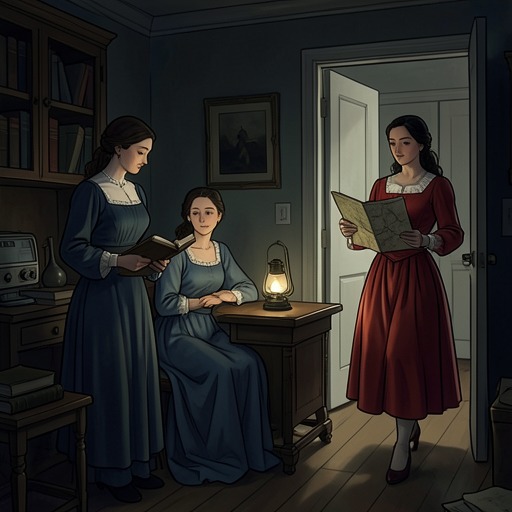
Lozen first enters the account through Violate Lacey, who mentions her among the people who sometimes visit the fort. Violate identifies her as an Apache woman and Victorio’s sister. She also gives the broader circumstances surrounding Lozen’s visits: Victorio is trying to keep the Apache people free and alive, and the Apaches have long been at war with Mexico. Lozen’s visits to New Mexico are described not as a military episode but as occasions to rest, pray, and get strong.
This introduction places her at a meeting point between a personal routine and a people’s struggle for survival. The account connects her to a war chief and to conflict with Mexico, yet its immediate emphasis is on the human purposes of her visits: recovery and prayer. It offers no description of her appearance, speech, or private thoughts. What it gives instead is a compact identity shaped by kinship, danger, and the recurring need to regain strength.
The Fort in Violate Lacey’s Account
Lizzy hears about Lozen while trying to bring Violate back to the convent. By then, Violate has been switching between past and present, and Lizzy cannot keep up with her talk. Lizzy agrees with her and acts interested, but privately regards the stories as fairy tales. She has decided that her time for believing in such tales is over, and is preoccupied with what to tell Mother Magdalena about having run off. She hopes that returning Violate will make amends for her disobedience.
That response establishes the distance between the two women’s accounts of the world. Violate speaks of Lozen as someone who comes to the fort; Lizzy, hearing her amid confused recollections, treats the claim as part of a story she cannot trust. The narrative does not ask the reader to take Lizzy’s judgment as proof that Lozen is imaginary. Instead, it makes her skepticism part of the circumstances in which Lozen is introduced: Lizzy’s urgent concern is getting Violate home and repairing the consequences of her own departure, not deciding whether every detail Violate relates is true.
Delvina’s Account of the Birth
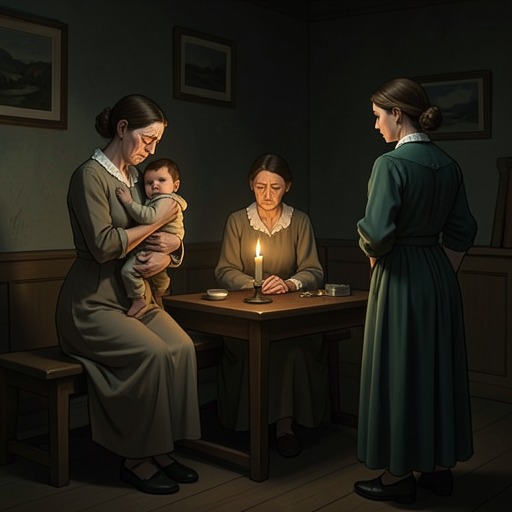
A later report gives Lozen’s presence a specific consequence. When Lizzy finds Delvina with her newborn, Delvina says that the baby was born the previous night and that she was not alone: Lozen helped her. Delvina explains that Lozen stayed through the night, fetched water, and made a fire. The charred remains of the fire are still nearby, a concrete trace accompanying Delvina’s account.
These details distinguish this report from a general mention of Lozen’s visits. Delvina names practical acts of assistance during a night when she gave birth by herself in the sense that she had no other helper present besides Lozen. Lozen’s support consisted of staying, bringing water, and making a fire; the account does not describe the birth itself or specify anything beyond those actions. The remains of the fire give the scene a visible detail consistent with Delvina’s testimony, while the narrative does not present Lozen directly or independently confirm her presence.
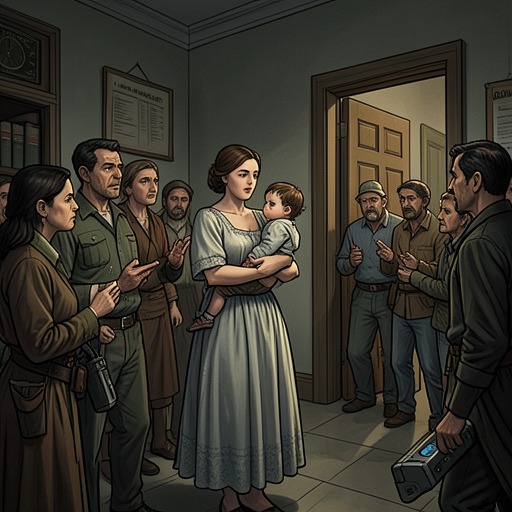
Delvina’s recognition of Lizzy as the girl who visits Robert’s grave connects the birth scene to an existing pattern of visits, but it does not establish how Lozen came to be there or what happened after she left. When Lizzy later tells Jean-Baptiste Lamy that Delvina said Lozen had helped, the name draws attention from the people in the room. Lamy does not show surprise and does not ask who Lozen is; others do, until he silences their questions. He then tells Ramona to feed Lizzy, give her a hot bath, and put her to bed in the guest room, with instructions to call him if she is not all right. His response establishes that the name is familiar to him, but the scene does not explain why or what he knows.
Narrative Presence and Limits
Lozen’s role is built through reported speech rather than through a scene in which she speaks for herself. Violate supplies the first account, Lizzy initially doubts it, and Delvina later describes Lozen’s help during the birth. This progression gives Lozen greater weight without removing the uncertainty created by her absence: the story moves from a claim Lizzy dismisses to a report linked to a particular night, a newborn, fetched water, and the remains of a fire.
The contrast also makes Lizzy’s changing position important. She does not announce a new belief about Lozen; she carries Delvina’s words to Lamy, where the name provokes a reaction from the room and an apparently familiar response from the bishop. The evidence therefore supports neither a full explanation of Lozen’s history nor a definitive account of what Lamy knows. What it does establish is her connection to the fort, her relationship to Victorio, her stated reasons for coming to New Mexico, and the aid Delvina says she received. Her significance rests in the way these reports place practical care and prayer alongside a larger struggle for Apache survival.